1. The Best 5 Emergency Home Backup Generators of 2025: Expert-Recommended & Amazon’s Best-Selling Picks
- Best Overall for High Power & Reliability: Westinghouse WGen9500DF
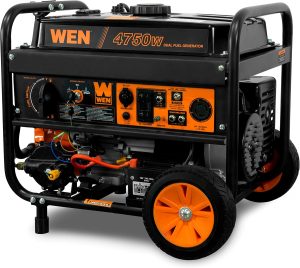
- Best Budget Dual-Fuel Generator: WEN DF475T
- Best Value Heavy-Duty Generator: DuroMax XP13000EH
- Best Portable & Quiet Inverter Generator: Champion Power Equipment 4500
- Best Automatic Standby Generator: Generac 7291 26kW Guardian Series

1
Best Overall for High Power & Reliability
Westinghouse WGen9500DF 9,500/12,500W-Watt Dual Fuel Generator
Key Features:
- 12,500 peak watts (9,500 running) with dual-fuel flexibility (gasoline/propane).
- Electric start with remote control for instant power during emergencies.
- CARB & EPA compliant for USA-wide use.
Pros:
- ✅ Powers central AC, fridge, and medical devices simultaneously.
- ✅ 12-hour runtime at 50% load (gasoline).
Cons:
- ❌ Heavy (240 lbs) – not ideal for portability.
Why We Picked It:
The Westinghouse WGen12500TF is the ultimate failsafe for prolonged outages, combining raw power with dual-fuel versatility. Its Transfer Switch Ready design ensures seamless integration with home circuits, making it a top choice for families prioritizing whole-house backup power.
2
Best Budget Dual-Fuel Generator
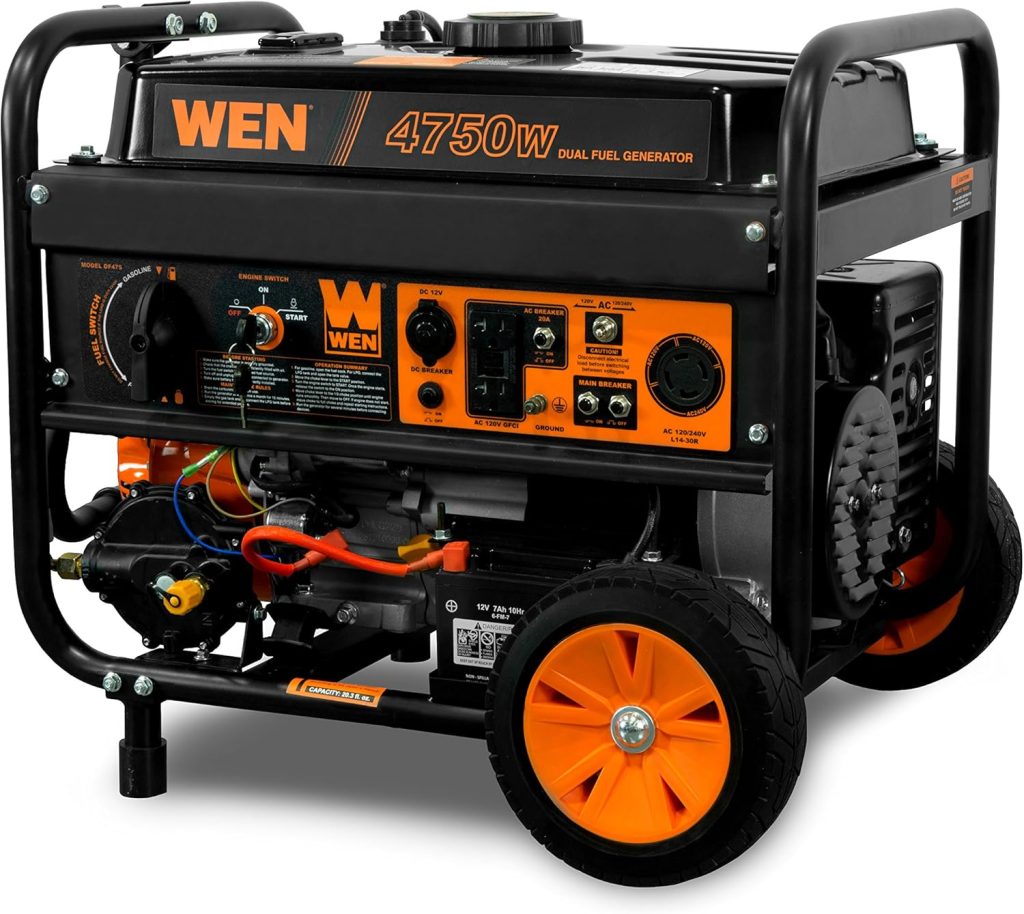
WEN DF475T 4,750-Watt Portable Generator
Key Features:
- 4,750 peak watts (3,800 running) with dual-fuel capability.
- Weighs only 99 lbs. – lightweight and portable.
- 8-hour runtime on propane (eco-mode).
Pros:
- ✅ Affordable price (under $600) without sacrificing reliability.
- ✅ Includes 120V and 240V outlets for RV or home use.
Cons:
- ❌ Not suitable for powering large central AC units.
Why We Picked It:
The WEN DF475T delivers exceptional value for budget-conscious buyers. Its RV-ready outlets and eco-mode make it perfect for small homes or camping trips, proving you don’t need to break the bank for reliable emergency backup power.

3
Best Value Heavy-Duty Generator
DuroMax XP13000EH 13,000-Watt Hybrid
Key Features:
- 13,000 peak watts (10,500 running) with gasoline/propane hybrid flexibility.
- Electric start + idle control for fuel efficiency.
- EPA-certified for all 50 states.
Pros:
- ✅ Powers central AC, water heaters, and multiple appliances.
- ✅ 10-hour runtime at 50% load (gasoline).
Cons:
- ❌ Loud (80 dBA) – not ideal for noise-sensitive areas.
Why We Picked It:
The DuroMax XP13000EH bridges the gap between affordability and industrial-grade power. Its hybrid fuel technology and electric start make it a powerhouse for large families or homes prone to week-long outages.
4
Best Portable & Quiet Inverter Generator
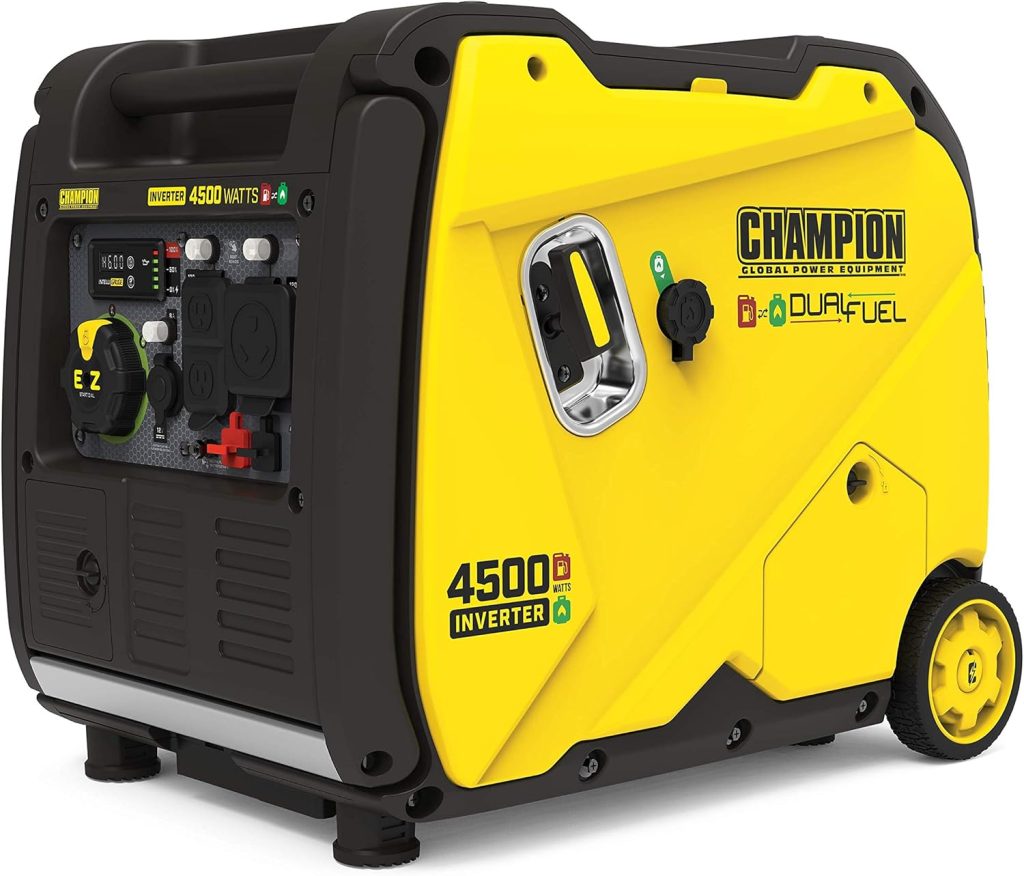
Champion Power Equipment 4500-Watt RV Ready Generator
Key Features:
- Peak/Running Watts: 4,500W / 3,800W (clean inverter power for sensitive electronics).
- Ultra-Quiet Operation: 64 dBA – quieter than a normal conversation (library-level noise).
- CO Detect™ Technology: Auto-shutoff for carbon monoxide safety.
- Portability: Weighs only 98 lbs with foldable handles and never-flat wheels.
- Fuel Efficiency: 14-hour runtime on 2.9 gallons (eco-mode).
Pros:
- ✅ Safe for Electronics: Pure sine wave technology protects laptops, phones, and medical devices.
- ✅ Parallel Ready: Double your power by connecting a second Champion inverter (up to 9,000W).
- ✅ RV-Friendly: Includes a 120V 30A RV outlet + 12V DC charger for batteries.
- ✅ Easy Start: Electric start with optional wireless remote (no pulling cords in the dark).
Cons:
- ❌ Limited High-Wattage Use: Struggles with large appliances like central AC or water heaters.
- ❌ Premium Price: Pricier than non-inverter models (but justified by quiet operation).
Why We Picked It:
The Champion 4500-Watt Inverter Generator is the gold standard for noise-conscious homeowners and RV enthusiasts. Its 64 dBA noise level—quieter than a dishwasher—lets you run it overnight without disturbing neighbors. We especially recommend it for powering CPAP machines, Wi-Fi routers, and mini-fridges during outages, thanks to its clean, stable power output. The CO Detect™ feature adds critical safety, while the RV-ready design makes it a versatile pick for both emergencies and adventures.
Who Should Buy This?
- Suburban homes with strict HOA noise rules.
- RV owners needing portable, eco-friendly power.
- Users prioritizing safety (CO Detect™) and fuel efficiency.
5
Best Automatic Standby Generator
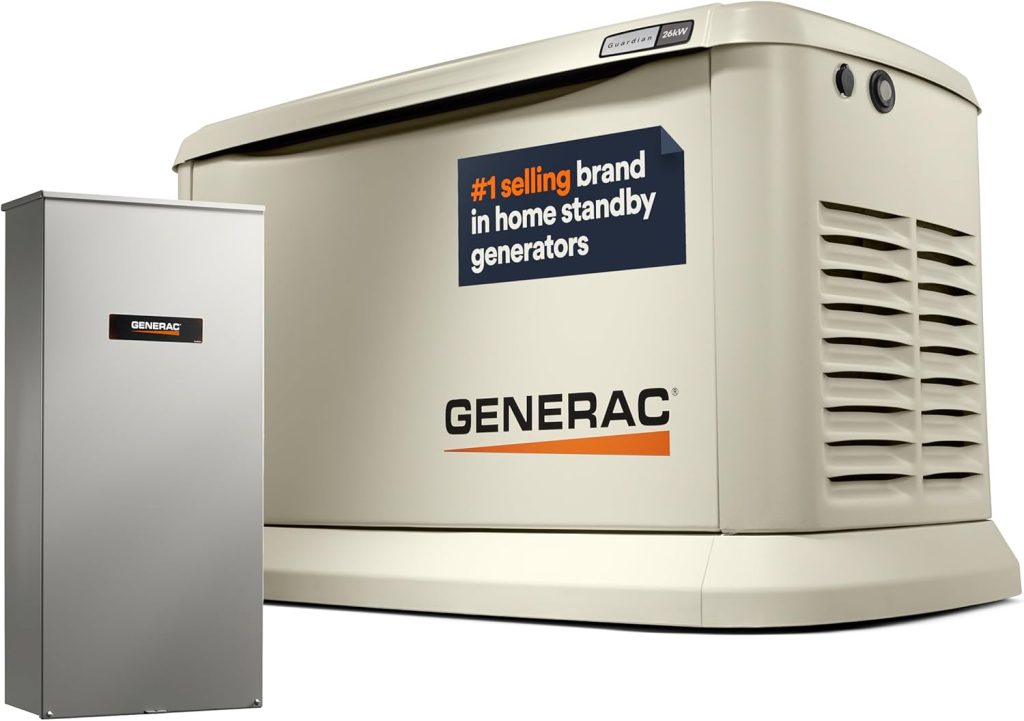
Generac 7291 26kW Guardian Series
Key Features:
- 26,000 watts – powers entire homes (AC, HVAC, lights).
- Wi-Fi monitoring for real-time alerts and remote management.
- Self-diagnostic system + 5-year USA warranty.
Pros:
- ✅ Automatic activation within 30 seconds of outage.
- ✅ Runs on natural gas or propane (no refueling needed).
Cons:
- ❌ Professional installation required ($3,000-$5,000).
Why We Picked It:
The Generac 7291 is the gold standard for hands-free emergency power. Its NEMA 3R weather-resistant enclosure and app integration make it perfect for tech-savvy homeowners who want reliability without lifting a finger.
2. Comparison Table
| Model | Fuel Type | Peak/Running Watts | Noise (dBA) | Runtime (50% Load) | Weight | Starting Mechanism | Safety Features | Price | Amazon Link |
|---|---|---|---|---|---|---|---|---|---|
| Westinghouse WGen12500DF | Dual Fuel (Gas/Propane) | 12,500W / 9,500W | 74 dBA | 12h (Gasoline) | 240 lbs. | Electric + Remote | CARB Compliant, Low-Oil Shutoff | $1,249 | |
| WEN DF475T | Dual Fuel (Gas/Propane) | 4,750W / 3,800W | 68 dBA | 8h (Propane) | 99 lbs. | Recoil Pull | EPA Certified, Overload Protection | $499 | |
| DuroMax XP13000EH | Dual Fuel (Gas/Propane) | 13,000W / 10,500W | 80 dBA | 10h (Gasoline) | 236 lbs. | Electric Start | Spark Arrestor, EPA Compliant | $1,499 | |
| Champion Power Equipment | Gasoline | 4,500W / 3,800W | 64 dBA | 14h (Eco Mode) | 98 lbs. | Electric + Remote | CO Detect™ Shutdown, Parallel Ready | $899 | |
| Generac 7291 Guardian | Natural Gas/Propane | 26,000W / 24,000W | N/A (Outdoor) | Unlimited (Fuel Supply) | 550 lbs. | Automatic | Wi-Fi Monitoring, NEMA 3R Enclosure | $6,699 |
Notes:
- Noise Levels: Lower dBA = quieter (Champion’s 64 dBA is library-level quiet).
- Safety: Champion’s CO Detect™ and Generac’s Wi-Fi monitoring are standout features.
- Runtime: Standby generators (Generac) run indefinitely with a fuel supply.
- Price: Generac requires professional installation (+$3,000-$5,000).
3. Conclusion:
Investing in a reliable emergency generator isn’t just about convenience—it’s about protecting your family when disaster strikes. From the powerhouse Westinghouse WGen12500TF to the ultra-quiet Champion 4500-Watt, our top picks balance performance, safety, and value for every budget. Stay prepared, stay safe.
4. How to Choose the Best Emergency Generator for Your Home (2025 Buyer’s Guide)
Fuel Type Matters: Propane vs. Gasoline vs. Dual Fuel
- Gasoline Generators:
- Pros: High energy density, widely available.
- Cons: Short shelf life (6-12 months), flammable storage risks.
- Best For: Short-term outages (<24 hours).
- Propane Generators:
- Pros: Cleaner burn, indefinite fuel storage, safer for indoor tanks.
- Cons: Lower energy output (requires more fuel for same wattage).
- Best For: Eco-conscious households or regions with strict emissions laws.
- Dual-Fuel Generators:
- Pros: Flexibility to switch fuels during shortages (e.g., gasoline now, propane later).
- Cons: Higher upfront cost.
- Best For: Long-term emergencies (hurricanes, snowstorms).
Pro Tip: Dual-fuel models like the WEN DF475T let you prioritize propane for safety and switch to gasoline for higher wattage during critical needs.
Wattage Calculator: How Much Power Do You Really Need?
Follow this formula to avoid under/overbuying:
- Essentials:
- Refrigerator: 700W
- Sump Pump: 1,500W
- Window AC: 1,200W
- Lights (10 bulbs): 100W
- Medical Device (e.g., CPAP): 300W
- Total Running Watts: 700 + 1,500 + 1,200 + 100 + 300 = 3,800W
- Add 20% Buffer: 3,800W x 1.2 = 4,560W (to handle startup surges)
A 5,000W generator (like the Champion 4500-Watt) can comfortably power the essentials above. For whole-house coverage, opt for 10,000W+ (e.g., Westinghouse WGen12500TF).
Noise Levels Decoded: Why dBA Ratings Are Critical
- <60 dBA: Whisper-quiet (ideal for RVs/campers).
- 60-70 dBA: Moderate (acceptable for suburban backyards).
- 75 dBA: Loud (may violate HOA noise ordinances).
Key Insight: Inverter generators (e.g., Champion 4500-Watt) are 50-60% quieter than traditional models. Check local laws—some HOAs ban generators over 70 dBA.
Safety First: CO Detection & Transfer Switch Requirements
- CO Detection:
- Generators emit carbon monoxide (CO). Look for models with automatic CO shutoff (e.g., Champion’s CO Detect™).
- Never run indoors—place 20+ feet from windows.
- Transfer Switches:
- Manual Transfer Switch: Affordable ($200-$500) but requires manual operation.
- Automatic Transfer Switch (ATS): Kicks in within seconds (e.g., Generac 7291).
Pro Advice: Invest in a Generac with Wi-Fi monitoring for automatic outage detection and seamless transitions.
FAQ Section
Can I run a generator indoors?
Never run a generator indoors. Always place it 20+ feet from windows/doors to prevent carbon monoxide poisoning. Opt for models with CO Detect™ shutdown (e.g., Champion 4500-Watt).
How often should I service my generator?
Perform maintenance every 50-100 runtime hours. Check oil, air filters, and spark plugs. Store fuel stabilizer for gasoline models.
Do I need a transfer switch?
Yes! A transfer switch ($200-$500) prevents backfeeding, protecting your home and utility workers.